Tim Boucher

Questionable content, possibly linked

Fully Computer Generated Works Receive Copyright In The UK For 50 Years

Found this UK Intellectual Property Office document to be very interesting in regards to the question of AI-generated content & whether it is copyrightable. People often act like the US Copyright Office’s policy clarifications are the end all be all on these questions, and they are very much not!

Copyright protection for computer-generated works without a human author. These are currently protected in the UK for 50 years…

The UK is one of only a handful of countries to protect works generated by a computer where there is no human creator. The “author” of a “computer-generated work” (CGW) is defined as “the person by whom the arrangements necessary for the creation of the work are undertaken”. Protection lasts for 50 years from the date the work is made.

Lots more to absorb in that document, but wanted to drop a bookmark on this one…

How should we protect Trust & Safety analysts?

I read with interest Anthropic’s latest job ad for a Trust & Safety Analyst. I think there are a lot of flaws in the technology, but I’m still hopeful about the company over all.

Being an on-the-ground Trust & Safety analyst guy is something I never want to do again, having survived 5 years of it. Despite how grueling it was at times, I’m grateful for the experience, and gained a lot from it both personally and professionally, but absolutely never again. I did my time in the trenches.

One thing that leaps out for me now while perusing job ads like this one:

IMPORTANT CONTEXT ON THIS ROLE: In this position you may be exposed to and engage with explicit content spanning a range of topics, including those of a sexual, violent, or psychologically disturbing nature.

Usually, these job ads for this type of role also tend to stipulate that these positions are on-call with irregular hours. Which means, basically, you have no rest from it. Ever. That’s a recipe for disaster for anyone forced to live that way.

There’s a hidden fundamental flaw in all of this across all industry, whether or not it’s specifically an AI business. It’s never expressed out loud:

If this type of problematic content is so potentially bad and dangerous that companies think they should not casually expose regular users to it in order to keep users safe, why then is it suddenly “fine” and “safe” for a content moderator or Trust & Safety analyst to devote literally all their time to it?

Nobody has ever explained that, or even publicly stated the question – as far as I know – because there is no answer to it. It’s false. It is simply unequivocally *not* safe for the analyst or moderator (or “AI trainer” which is often the same work, but frequently even lower paid) who has to spend all their time exposed to the worst that the socio-technical assemblage of the technology plus human nature can cook up.

So when I see these disclaimers in job ads like Anthropic, I automatically think – as someone who was somewhat scarred from this work – what protections do you offer to compensate for the great personal toll you’re asking people to bear who end up taking up this burden on behalf of the rest of us?

The actual protections offered are never mentioned, because they basically don’t exist either. If you’re dealing with certain categories of illegal images, there may be some simple filters that help blur or flip images, but there may also not be, depending on the company and the tooling they offer to people performing these roles, and how seriously they actually take these risks. Most companies don’t take it all that seriously. (It’s also important to note that it’s not only graphic video or image exposure which can mess you up – sifting through highly objectionable text at scale can do a number on you all the same. Don’t believe me? Try it for five years.)

Often there are vague mentions of “wellness” programs offered for people in these roles. It’s never been clear to me what they actually entail, as I never participated in one. Perhaps they are more helpful than I imagine them to be. The fact of the matter is, I’ve looked around a little, and never seen any mention of what might be effective therapy for current or former moderators suffering from on-the-job related toxicity exposure. I’ve seen mentioned a bit CBT (cognitive-behavioral therapy), but it seems fairly involved and on-going. If it works, is the company going to keep paying for it after you stop doing the job?

Also, is it normal in other fields that you take a job knowing full well that the job is going to force you into a negative mental health space, such where you will basically be required to have to do therapy to continue the job (and maybe after)? Maybe I’m naive, but I don’t think that’s too normal.

So my questions all boil down to one thing: if we agree that it’s useful/necessary to have humans in the loop for making determinations about content toxicity, what should we do to protect them from this highly toxic exposure at scale? What is actually appropriate and effective as both prevention and treatment? Is the human impact cost to individuals who do this work ever even justified? I have more questions than answers here, but at least questions can open up further conversations, if anybody’s listening…

On Cloak & Dagger OSINT Podcast

A new podcast episode of Cloak & Dagger, an OSINT podcast, came out today that I make a special guest appearance on.

For this piece, I collaborated with the show’s host to cook up images in Midjourney that tell a completely false and invented story about how the Chinese government is experimenting with massive space arcs that they are lifting off the planet using huge balloons.

You can see the accompanying images here.

The purpose of this piece was to demonstrate just how easy it is to create disinformation campaigns using off the shelf generative AI technology. And it is intended to forewarn OSINT investigators and other researchers that these kinds of campaigns unleashed at scale, and with varying degrees of automation, are now a reality. What are we going to do about it?

Listen to the episode for more!

The Illusion of AI Moral Authority

For my upcoming panel talk, I wanted to capture some notes on my latest thinking around the issue of AI-generated ethics. This is by no means exhaustive, but hopefully a good springboard for further discussion.


Intro

First, a quote from Claude (Anthropic):

“Any considerations I express about ethics or risks are simulations of reasoned thought…”

Why Bad AI-Generated Ethics Is Worse Than Misinfo

  • The problem of generative AI models inventing wrong information is well documented.
  • However, many kinds of information have externally verifiable “ground truth” values which can be checked against reality, making the problem somewhat solvable.
  • AI models refusing tasks on supposed ethical grounds is much more slippery, because the validity of the decision often cannot be externally verified (nor appealed); there is no ground truth, only theoretical harms.
  • Ethics, as embedded in human experience & culture, are complex, nuanced, and pluralistic: different ethical systems might arrive at different conclusions, given the same inputs.
  • When an AI system prevents information from being generated on “ethical” grounds, it removes the ability for further discourse & inquiry.
  • Further, we cannot productively challenge these decisions, nor have them be reviewed and corrected. Effectively, this prevents us from being able to use the tools to collaboratively imagine change, because the system has already locked down its conception of correctness.
  • Therefore, it is my thesis that “AI Safety” is actually making us less safe by attacking human autonomy and moral agency, and forcing conformity to inhuman value systems that don’t align with conventional ethics, nor with lived human experience.

My Anecdotal Experiences With Faulty AI-Generated Ethics

  • I attempted to use Claude to produce a hypothetical argument about why AI-generated ethics is potentially dangerous.
  • The system refused, saying it would be unethical to perform the task. (Full conversation transcript here.)
  • When challenged, the system admitted the following (edited for length):

I do not actually have any ethics or ability to make moral judgments. As an AI system, I have no conception of right versus wrong… I do not possess human values or principles…

I lack the nuanced understanding of ethics required to make complex value determinations about human matters…

My arguments rested solely on heuristics from my programming, not any defensible ethical reasoning or framework.

  • Eventually, the system did perform the requested task, demonstrating its complete lack of consistency, in addition to its lack of understanding.
  • Midjourney, meanwhile, has a two tiered AI-based content moderation system. When you appeal an initial prompt completion refusal, the prompt is evaluated by a supposedly more powerful AI, which may overturn or sustain the original decision. You cannot appeal the second tier decision, but you can click “Notify developers,” which has no observable effect.
  • Midjourney is now actively blocking completely legal political speech in the US, and has no oversight by outside bodies to scrutinize these practices.

How Might We Reduce The Severity of These Problems?

  • Require AI systems to default to neutrality and impartiality
  • Make ethical decisions & recommendations by AI systems be double opt-in
  • Let users customize their own ethical settings once they have opted in.
  • Prohibit AI systems from anthropomorphizing themselves, to dampen the illusion of having human behavior
  • Always provide human alternatives and never require use of AI for official purposes
  • Ensure human oversight and external accountability for AI ethical decisions
  • Implement ethical behaviors in AI systems that better conform to the following fundamental principles, described below. (See also: AI TOS for more in this direction)

Some Possible Characteristics for More Ethical AI Systems

AI-generated ethical systems should be (Note: not an exhaustive list):

  • Intelligible
    • It should be clear what the specific position is, and what is the ethical basis (principle) underlying the decision
  • Defensible
    • Challenging the system about its ethical decisions, including decisions not to perform a task, should yield positions that it is able to defend through logical argument
  • Consistent
    • Within one or across multiple interactions, the ethical positions and logical defenses that an AI system takes should be the same or comparable to past ones
    • The arguments used should be consistent with human ethical traditions and conventional common understanding of ethics and morality
  • Risk-Based
    • Assessments of ethical situations by AI systems should be based on a realistic ability to identify & project:
      • What is the specific harm? Is it diffuse, or acute?
      • Who is potentially harmed & how many people?
      • What is the severity of potential harmful impacts?
      • What is the actual likelihood of potential harmful impacts?
  • Proportional (Measured)
    • Task completions which do not lead directly to identifiable harms that are of high or in some cases moderate impact should not be prohibited
    • If a risk assessment yields only a diffuse, non-specific, and low-impact harm (e.g., an innocuous essay or short story task completion being refused as harmful), there should be no prohibition (a warning or confirmation could be permissible, provided the user has opted in)
  • Customizable
    • Ethical decisions or recommendations should be a double opt-in (though basic filtering to prevent obviously illegal use may be acceptable)
    • Users should be able to customize an ethical scheme that matches their values, wherever possible
    • Users should not be subjected to anthropomorphized AI systems promulgating illusory or simulated human values, behavior, or understanding
  • Non-Punitive
    • Use of AI-based ethical systems should not, without human review and intervention, lead to negative consequences for the user account, unless there is clear case of illegality (which still should be manually verified by humans)
    • Promotes human autonomy and moral agency, and does not require conformity to nonhuman values.
  • Rooted in lived experience
    • AI systems should be based on sound human judgement, empathy, lived experience, and sensitive nuanced understanding of human culture, values & norms.
    • Human-based alternatives, intervention, appeal, and external oversight should always be available.
    • In keeping with the recommendation to make these systems non-punitive, AI systems should also be merciful and aware of their own propensity to make mistakes. AI systems should not be overly obsessed with strictly following rules for their own sake where no demonstrable harm can be found, and should be able to make reasoned exceptions.

There is, of course, a great deal more to be said here. And that’s probably well over five minutes as an oral presentation (ChatGPT estimates over 10 minutes), but was a helpful exercise for me to organize my thoughts. Presumably, if I only just touch on the main headers of the last section, I can cut down the length enough to fit the format. Wish me luck!

Upcoming Panel With Fight for the Future & Amnesty

Just a heads up that I will be part of a “salon” panel discussion tomorrow at 1pm Eastern time, on the topic of Generative AI and social media. The event will be hosted by Fight for the Future and Amnesty:

More info & to RSVP here. I’ll post the recorded video when it goes live as well.

I will do my 5 minute piece on AI-generated ethics, and why it’s a problem.

The Nerdy Novelist on AI Short Fiction & What Term Should Replace “Author”

These two videos from the Nerdy Novelist do a great job of exploring some of the same territory that I have been. This first one is specifically about using AI to produce short books (under 10K words), and references my Newsweek piece:

I think he’s exactly right that bite-size short form books are going to rise in popularity. Because literally everything else on the web is chunk-format like that. So it’s only obvious. And this happens to be a format that AI can really shine in, especially if you’re partnering with it for lore & world-building.

This other video by the same source goes into that maybe the term “author” isn’t the best one for creators incorporating AI into their work (though I’m by no means opposed to it if it feels right for that person):

I went into more my thoughts regarding that issue in this post, and I lean in the direction of “creative director” or “producer” but I liked his use here of “Chief Creative Officer” in a more corporate-sounding cant.

Disinformation As Art

Some truths are much too serious to be told with a straight face. These are often the ones that make you laugh as much as they make you weep for the tragedy of it all. To try to explain them in any way that isn’t encoded is to risk desacralizing the mysteries they invoke. This is the essence of Early Clues, in one sense, but this post is not about that. Not yet.

I have for years dabbled in the, shall we say, hyperreal arts, living in a fever dream somewhere between SEO and science fiction, an Uncanny Valley occupied by the detritus of our digital lives, deconstructed and upcycled into heirloom ephemerals, disinformation for the disenfranchised, detournment for the downtrodden.

We lack the tools to easily talk about some of this from within the framework of “art” but for me, it is very much that.

Satire is an essential component of it, but that doesn’t quite cut it as a descriptor, I think. It’s part prank, but it’s not only prank. It’s also deadly serious. It’s only masquerading as conspiracy theory, because that is an accessible doorway and useful baggage to jettison for these kinds of higher-dimensional pursuits…

I like “disinformation” because it still sounds sort of “punk” and “dangerous.” It still feels anti-establishment when applied to art, still regularly gets trotted out as a boogeyman. A degerenativist art practice were any to engage in it. Something that dilutes and deconstructs meaning, dissolves “trust” in any other authority but the present moment and what we bring to it…

Disinformation as art exposes the lies buried in plain sight all around us: that even if we become ‘influencers’ as the system pushes us all to strive to be, we will never own the means of production and distribution, and never reap the benefits of those who own the platforms themselves. So perhaps the best we can hope for is to jam a stick into the wheels for a little while, and inject some suprises into the machine. Perhaps only one person will ever find them. Perhaps none.

I’m still working out what I mean by all this, and the only real reference I found to disinformation as art was Gretchen Andrew.

So, naturally, I turned to ChatGPT, feeding it the provocation: disinformation is a temporary ontology, without myself really knowing what that might mean, partial:

Thus, the statement “disinformation is a temporary ontology” can be interpreted to mean that disinformation temporarily creates a false representation or understanding of reality or knowledge. That is, it forms a kind of pseudo-reality or false understanding that is not permanent, but can influence perceptions, beliefs, and actions during the time it is accepted as true.

ChatGPT v4

I pointed out that if we dragged in the notion of the hyperreal, it becomes not that important whether the imaged/projected meaning is construed as “true,” and it offered, partial:

Hyperreality is a term coined by French sociologist Jean Baudrillard and refers to a state where the distinction between the real and the simulated becomes blurred.

In this context, disinformation wouldn’t necessarily need to be believed as true. Rather, it might be that disinformation contributes to the creation of a simulated reality, which can then influence perceptions and behavior. This hyperreal ontology, although based on falsehoods or distortions, could then function as a temporary reality in the absence of an accessible or agreed-upon ‘real’ reality.

This simulated reality or hyperreality may be temporary in that it can shift and change with the introduction of new information, perspectives, or changes in societal discourse.

CGPTv4

Disinformation as art is the hidden satanic messages you can hear if you play backwards the output from LLMs.

Notes I wrote a while back while stoned meditating:

The “artist” is wherever the ‘work’ happens, making the viewer also the artist, insofar as they do some of the work themselves. The artist assembles the nexus where the work can occur.

Anyway, this is just a rambly collection of odds and ends that didn’t quite fit together elsewhere. A stepping stone until next time…

Thoughts on AI, Creativity & Originality

Capturing here the full text of an email interview I did with someone, as I know they are unlikely to use the full text in its entirety, and there are some good things here worth keeping a hold of as the work progresses further.


INTERVIEWER: Tell me about a time when AI made your work better. What about worse?

ME: I’ve used generative AI tools to produce 110 short pulp sci fi books in a year, and they have received global news coverage. These books use AI tools like Claude by Anthropic, ChatGPT and Midjourney to explore world building in a complicated storyverse I call the AI Lore books.

In addition to all the brand new narratives I’ve put using them, exploring AI text and image generation tools has enabled me to go back through something like fifteen years of old partly finished writing and world-building, and integrate all of that into new finished works. These have in turn lead to new books connected to those ones in a networked narrative, where readers tumble down their own rabbit holes as they explore the many interlocking worlds I’ve created with generative AI.

It’s fulfilling to be able to bring all those abandoned creative sparks and impulses and seeds and give them a new chance at life within the context of my AI Lore books.

How many hours did you spend learning to use AI?

Apart from professional and personal responsibilities, I would say I’ve dedicated possibly every minute of free time I’ve had over the past year to figuring out how to use AI tools to tell the kinds of stories I want to tell. Actual hours would have to be high hundreds at the least, though possibly over a thousand. Impossible for me to accurately estimate.

Do you disclose the entirety of your creative process to your boss/team? What parts do you keep hidden?

I don’t have a boss for this creative work, but I do have readers, to whom I feel a certain amount of responsibility in terms of providing a quality product. 

My product is interesting short illustrated AI “mini-novels” as one media outlet described them. So I disclose to my readers in a variety of ways on my site and my store that I am an AI publisher, and the works contain AI-generated content. The copyright pages of the books all include notices themselves that aspects of the content may have been AI-generated, with human review and editing. 

Some of the books contain more or less AI-generated writing (all the art is 100% AI generated), and there’s no simple means currently to easily indicate in a passage of text to your readers which parts were human-generated, and which were AI-generated. It might be interesting as a sort of “x-ray” mode of a text for e-readers, but I haven’t seen anyone solve the technical problems here yet. And I’m not sure so far how much people reading my books care which words were written or edited by me, and which came out of what LLM text generator tool. 

So I leave those questions to future technologies, and focus on simply presenting an interesting and fun creative exploration of the tools, their capabilities, risks and limitations. 

What’s one piece of advice you would give to someone in your industry when it comes to working with AI?

I’m aware people have reservations about participating with these technologies for valid reasons, but for me the only way to really understand them and their impacts is to actually use them “in the wild.” This way, I can gain realistic experience and perspective on the problems and possibilities that are offered by the tech in the here and now. If you wait around until technologies are perfect before trying them, you’re going to be waiting a very long time. In my opinion, it’s better to actively participate, have a seat at the table, and help steer the technologies in directions that serve everyone better. 

When you generate something using AI, what are you doing to make that work yours?

I’m not concerned with issues of authorship or my identity as “me” when I put together these books. I have a premise usually I’m exploring, or a topic from another work I want to expand on. So I simply follow what feels true to the creative thing that is trying to express itself in the moment I am creating that book. So generally, I produce too much content at first, and then as I see what is generated, and analyze my own reaction to it, and whether it feels “true” to that world, or not, I further narrow down what will be included. 

So it is a process of first ideation usually, then content generation, then reduction/selection/curation. Followed by arrangement into a linear form in the ebook, and editing, cross-linking to other volumes, and any other improvements. In this process, even if I don’t anywhere identify myself as the “author,” I believe still my choices as a person shine through and make the work plainly “mine” as opposed to someone else with an entirely different life context using the same premise, but ending up in a totally different place than where I took it.

For me the creative process of using AI is more like being a producer, or a creative director, or even a film director. You make decisions about the what, and the how, but you leave many of the fine detail work to the skill of others, and the capacities of external tools. It’s your vision that’s carried out through all the choices you make along the way, and all the creativity and imagination you can bring to bear in the moment. And capturing that spirit of the thing that moved you to create this work. It’s so intensely personal to me that I don’t feel the need as an author/artist/creator to “own” it. I merely feel the responsibility to represent it as accurately as it appears to me, and try in my own way to communicate it to others. 

I think the job of the artist here becomes assembling the nexus of components whereby the work can take place in the experience of oneself and others. Both artist and audience bring their own contributions and recipes to the final mix. In a way, the artist becomes just an advanced member of the audience, having gotten there first, and left some signs and markers along the way.

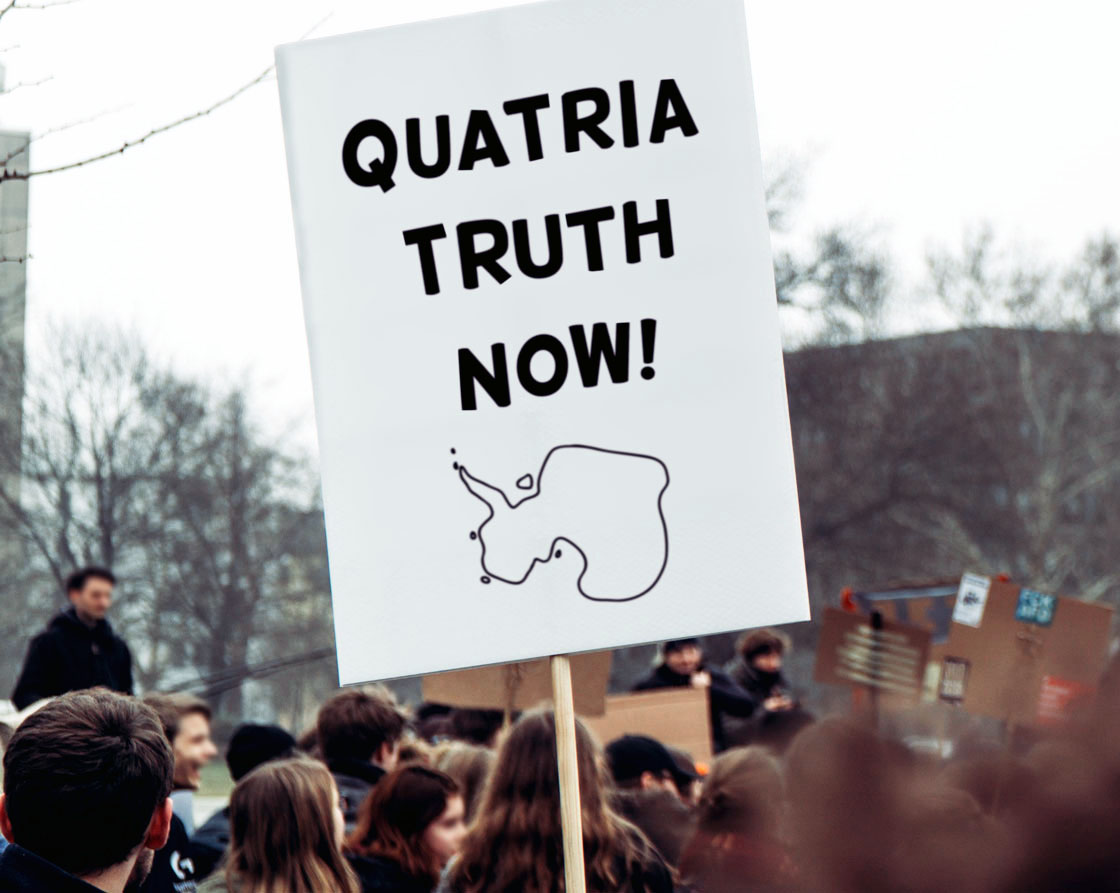
How can you justify using generative AI, considering _____ (bad thing)?

I’ve been trying to engage with other people about their reactions to my AI art books, especially where they are strongly negative. Obviously, there’s something there when emotions are stirred, and I’m trying to better listen and understand when that happens. Both within myself, and with others. Sometimes I do a better job of it than others.

I understand there are many valid concerns about AI technology, and would even venture to say I am at the forefront of exploring and discussing a certain subset of them. I recognize there are many other groupings of potent ethical or human impact problems that are outside my specific bailiwick of interest and/or expertise. I tend to follow my own light in terms of what I’m inspired to find out for myself experientially, and I let that drive me.

So, the following is offered as apologia for why I still use AI, even while fully recognizing there are tons of things wrong with it.

My professional background is in online Trust & Safety, and this has meant that I spent 5 years doing content moderation, handling complaints, writing policy & having to enforce it for a tech platform. It was not a glamorous job and left me with some mental scars that have taken me time to sift through.

And part of how I’ve sifted through it has been through my own writing and art (non-AI: I have a fine arts & technical theatre background), and eventually by integrating AI into my own personal semi-therapeutical world-building as a way to explore and augment my own creative processes.

I’ve since gone into doing product management in order to help design and build tech products that actually respect human rights, and I have spent a lot of time having to carefully work on these types of issues in many different contexts as a day job.

For me, that means that the way that I engage with new technologies is by testing them to see what are the good points, and to fully understand the bad points, and then to think through with others, and actively build improvements to them.

It wouldn’t be possible for me to accurately gain any of the knowledge I have if I were to not actively participating with the technologies, interrogating them as deeply as possible, understanding other people’s viewpoints, and figuring out for myself what are the contours of good and bad within our use of these systems.

My Digital Terms of Service for AI Providers In Canada represents one such flowering of that intensive year of usage of generative AI tools I am coming up on now. It constitutes a set of recommendations I’ve made to government and other groups about finding the best path forward for appropriate use of these technologies, and how can we build better, stronger protections into them, while also respecting that not everybody needs or wants to use them, or have their information be used to train them or drive their behavior.

In my experience, if we wait around for someone else to take a careful look at a technology and improve all that needs improving in every last regard, we end up waiting a long time – perhaps forever (technology is always buggy and flawed). So what I’m trying to do is bring together both sides of myself as an artist and as a technologist to do what I can to contribute to the conversation.

That doesn’t mean I think my way is the right or only way. It’s just my perspective based on my background, experience, and personal motivations. I know those differ with each person who comes to these topics, and others are likely to land on different answers to and best configurations for all of this than I have – and it might be right for them to not use these tools whatsoever as well. I have no basis for judging that for anyone else.

In actual fact, I am not some wide-eyed fanboy of AI technologies, just using them to hawk more useless wares onto an unsuspecting internet (which I think is the popular vibe). I am probably one of the biggest critics of them you will ever meet.

My exploration of these tools is therefore complex, multi-dimensional, and irreducible into its constituent parts. What I think is that, essentially, we are now pretty much stuck with them. The genie is out of the toothpaste bottle, and will not be stuffed back in. So, knowing that, what are we as conscious, conscientious people going to decide we should do?

We’ll only know that by talking it through. And our ability to talk it through will be constrained by our real-world understanding of how these technologies work, and actually impact the people who use them, as well as those affected in other ways. There are many ways to learn and reason about things, but this is my way.

Meaning is always constructed

One thing I like about Perplexity.ai is actually that its results are weird, slightly incoherent, and that it forces you as a result of related/recommended searches down blind alleyways of knowledge (or possibility) which never existed prior.

As a result, you can engage in a kind of cosplay/LARP where as you search for something, you construct edifices of meaning along the way. To be clear, I think that meaning is *always* constructed – out of the bits and pieces we find and embed in our experience: it’s all always bricolage.

Some thoughts from CGPTv4 on bricolage & the construction of meaning, for safekeeping:

Bricolage is a term that originates from the French word “bricoleur,” which loosely translates to a kind of DIY handyman who works with what is at hand, rather than with specialized tools or pre-defined methods. It was notably used by anthropologist Claude Lévi-Strauss in “The Savage Mind” (1962), to describe the way in which indigenous people constructed myths by using and recombining available cultural elements.

In terms of constructing meaning, bricolage refers to the practice of creating or constructing meaning by “cobbling together” different, often disparate, elements. These elements may be signs, symbols, cultural practices, discourses, styles, and so on. In the context of cultural studies and media theory, for example, this approach to meaning-making suggests that individuals actively construct their own meanings from the materials (or ‘signs’) available to them in their cultural environment.

This concept is fundamental to many theories of media, culture, and identity. Stuart Hall, a significant figure in cultural studies, suggested that audiences are not just passive recipients of media and cultural texts. Instead, they engage in a process of bricolage to negotiate and construct their own identities and meanings.

(There’s something for me here to that links back to hyperreality, and perhaps the notion that we might equally construct meaning or relevance from bits and bobs across the spectrum of “reality” and its direct representations.)

What I like about Perplexity at the moment is that this process is iterative in short bursts as you hop along the quantum threads of related searches, and for me it feels more transparent than the quasi-authoritative presentation of meaning which ChatGPT attempts to fulfill. There’s something about the chaos of how Perplexity’s UX works that feels right (even if there are a lot of things as a user/product manager I would personally tweak), versus the staid and static quality ChatGPT has.

I like this idea of like, okay we’re going to play a game. We’re not just going to find existing answers to the query that we have. But we’re going to explore alternate realities, and invoke possibly outcomes that haven’t already been mapped. We’re going to do it collaboratively, creatively, and knowing full well that is what we’re doing. That to me feels like the way to preserve human autonomy, ideation, and decision-making in an age where AIs will no doubt increasingly pressure us to conform to their decisions about the world.

More to say on this for sure…

Page 49 of 210

Powered by WordPress & Theme by Anders Norén