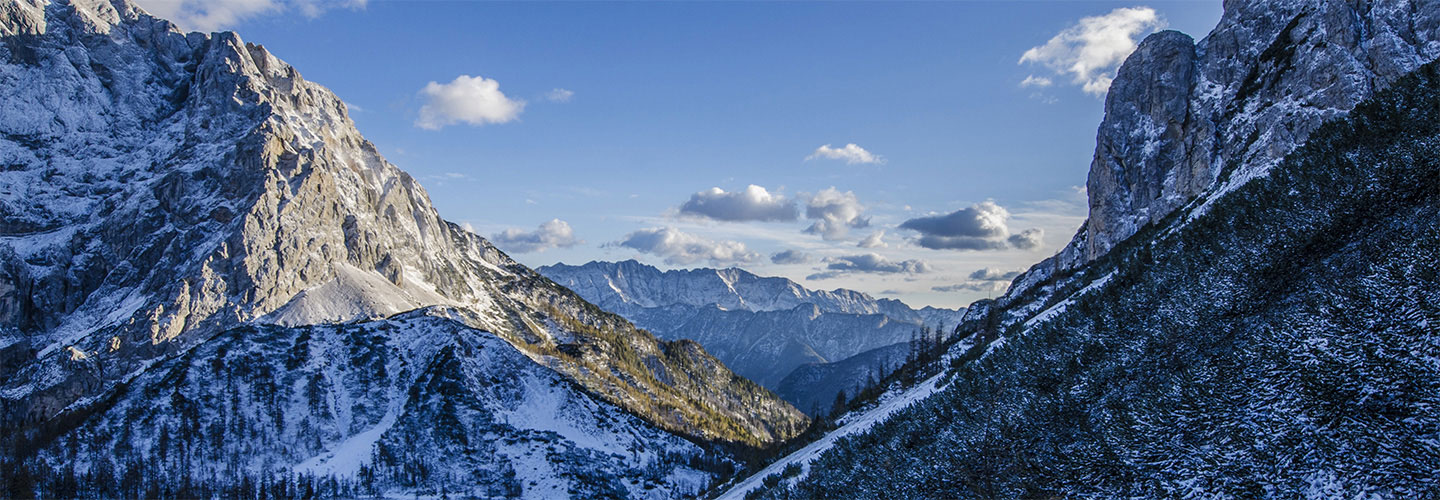
“In our language, we called them Vespers. When Elgorra struck into the deep muds of our seas, the crystal embers containing the sleeping fire of that people were buried deep in the most unreachable places. And the Vespers, though insubstantial in form, ruled that dry part of the new continent not submerged beneath the waters. Invisible by day, their apparitions became visible at night, as they walked their continent to the edges of the sea, looking for the crystal embers.”
Category: Other Page 145 of 182
“My people are Seftari.”
“Seftari?” Benda asked.
Eradus waved his hand bluntly, “A far away and ancient land, across the desert of Ner. But, there’s no way… Seftar was — ”
“Pulverized in the shock-wave when Hard-Hammer struck, and obliterated by Sea-Rise. Aye.”
“And by your reckoning, this was…?” Benda quizzed him.
“Long ago,” Banarat said, sipping from the goblet, adding mysteriously, “In my youth.”
“Seftari, then,” Benda said, “must be long-lived.”
“Apart from me, their light was extinguished. I am the last.”
Benda woke up with a splitting headache, and immediately tried to put his hands up to his face to rub his temples and eye sockets. But he found he could not move. He was bound hand and foot, and evening was settling in.
Not far off, a small fire gave off light, warmth, and some smoke. His two Xenarth captors huddled round it, cooking on sticks what looked like skinned wild game they had presumably hunted on the open plains. Benda’s stomach growled, but he said nothing, and tried to give no indication of having come to. He looked around, but in the dark of the open plains could not tell whether they had moved at all.
In actual fact, a gurjuk – even the great gurjuks, such as Xenarths were known to train as war mounts – were neither large enough nor strong enough to carry both a Xenarth and an adult man on their backs. So while he was unconscious, Benda had been tied up to their satisfaction, and they made camp while they quarreled about what to do with their prize.
Even if he had been awake to hear the bulk of the argument, Benda would not have understood it, as the Xenarth tongue was alien and strange to him. But one of the soldiers thought they should return to Holmat territory with their prize, and use the hostage to negotiate an even greater share of the plundered treasure. The other however said that if the Holmats had sent out this spy after them to waylay them, then it was certain the tribe meant no good, and they would be killed by them on sight. But we would take a great many with us to the land of the shades, was the first soldier’s counter-argument. And as they roasted the small caprom rodents they’d caught that afternoon, just prior to encountering Benda, they both seriously considered this option. For Xenarths, to die in battle, with the corpses of tens of your enemies at your feet was one of the best possible ends to their short brutal lives.
The second soldier, however, was older and more cunning. He said instead that they should take their captive to the Squamats, and attempt to trade him there, where their mortal enemy would catch a higher price. This seemed like a good idea to both, as the only thing Xenarths cherished more than dying a glorious death in battle was being lavished with immeasurable wealth, precious metals, and jewels of all descriptions.
They talked this over a time, and the first soldier eventually pointed out the obvious: whether or not they brought the Squamats a captive member of their enemy tribe, the Xenarths themselves had been participating in raids against Squamat villages in the river valleys coming out of the mountains. And it was likely that word had reached their capital to the south already in Lake Squamat. And that there too, they were just as likely to be killed on sight.
Less likely, corrected the older, craftier soldier. For if they approached the Holmats, they would certainly be recognized at once. But if they approached the Squamats, it was entirely possible their recent deeds would remain unknown. In the end, the deciding factor boiled down to whether a friend or a foe would pay a higher price for a hostage. The first soldier said one’s countryman would pay the higher price, for the lives of one’s enemies are valued not at all.
Unless, said the second, the captive was a man of rank, which they both esteemed Benda to be on account of his fine camouflage cloak, and the harp which they had found and pulled from him when they searched his unconscious body. Therefore, said the second, the enemy Squamats would pay the higher initial price, because they would understand the significance of this hostage, and his value to their Holmat enemies.
So, even if the Holmats would pay the higher end price, the danger to the Xenarths was greater if they returned to Holmat territory. And they could use this higher estimated final value as a bargaining chip with the Squamats, who they presumed would simply see the whole thing in terms of a profitable economic transaction, as they themselves did. And they could be easily brought to understand that whatever price the Xenarths demanded, the Holmats would certainly double it when the Squamats later went to trade Benda back.
Whether this logic was entirely valid under the norms of Squamat culture is outside the point, as this chain of reasoning and argumentation was typical of Xenarths. And to a certain extent, this pragmatic, profit-driven hard-headedness – along with their natural toughness, strength, and, of course, their armor – was what drove their success as mercenaries across Kremel, and even into the Ner desert, and the regions beyond. So they decided to head due south to Lake Squamat, where they would try to trade their prisoner to whatever local chieftain they could find who seemed amenable. But of course, as Benda could not ride, they needed him in walking condition.
After their course of action had been decided, and their caproms nicely roasted, the younger of the two went over to where Benda lay (who had shut again his eyes to feign unconsciousness, still not understanding what was happening, or where they were headed). The soldier kicked him once hard in the ribs. Benda groaned and opened his eyes.
“Awake?” the Xenarth said in the common tongue of the plains, which Benda understood enough to nod. “Eat,” the soldier said, and threw a hunk of roasted caprom meat onto the dirt near Benda’s face, and walked away. Though he had to wriggle somewhat and roll onto his side to do so, Benda took it in his mouth, and chewed it hungrily.
After this, the Xenarths went back to laughing and cavorting, and gambled for a while using some golek-knuckle dice before falling asleep. The gurjuks, which had been untied to go hunt for themselves, were nowhere to be seen, and Benda too fell back to a dark and dreamless sleep.
Signature to Asclepeion was the practice of incubatio, also known as ‘temple sleep.'[3] This was a process by which patients would go to sleep in the temple with the expectation that they would be visited by Asclepius himself or one of his healing children in their dream. During this time, they would be told what it is that they needed to do in order to cure their ailment. At the very least, they would wake up having not been directly visited by a deity and instead report their dream to a priest. The priest would then interpret the dream and prescribe a cure, often a visit to the baths or a gymnasium.
Source: Asclepeion – Wikipedia
An immram (/ˈɪmrəm/; plural immrama; Irish: iomramh, pronounced [ˈʊmˠɾˠəw], voyage) is a class of Old Irish tales concerning a hero’s sea journey to the Otherworld (see Tír na nÓg and Mag Mell). Written in the Christian era and essentially Christian in aspect, they preserve elements of Irish mythology.
The immrama are identifiable by their focus on the exploits of the heroes during their search for the Otherworld, located in these cases in the islands far to the west of Ireland. The hero sets out on his voyage for the sake of adventure or to fulfill his destiny, and generally stops on other fantastic islands before reaching his destination. He may or may not be able to return home again.
Source: Immram – Wikipedia
Historians have conjectured the “Devils” of Satanazes might be a reference to the Skraelings (indigenous peoples of Greenland and Vinland) reported in the Norse sagas, notably the Grœnlendinga saga and the saga of Erik the Red, which began to filter south around this time. Pizzigano may have constructed Satanazes island to capture their rough geographic location.[6]
The possible connection between the Satanazes and the Skraelings was first proposed by Nordenskiöld (1889), his attention drawn by an inscription on some islands between Newfoundland and Greenland in the 1508 map of Johannes Ruysch, which notes how ‘devils’ located there attacked sailors (See Isle of Demons).[7] The connection need not require direct knowledge of the Norse sagas themselves, e.g. Fridtjof Nansen has drawn attention to how Norse encounters with North American ‘demons’ were adopted in Irish immrama,.[8] Given the tendency of the legends of Atlantic seafarers – Norse, Irish, Arab and Iberian – to move quickly and cross-fertilize each other,[9] the news of an Isle of Devils out in the North Atlantic may have arrived to Italian cartographers via several channels.
Source: Satanazes – Wikipedia
The island gained wide media and public attention in November 2012 when the R/V Southern Surveyor, an Australian research ship,[2] passed through the area and “undiscovered” it. […]
During the voyage, they noticed a discrepancy between different maps and decided to sail to the supposed location to investigate. The crew found no island and recorded depths never less than 1,300 metres (4,300 feet) […]
However, it became apparent that a land mask was applied to these data sets during pre-processing to differentiate between land and water. Since the World Vector Shoreline Database (WVS) has become the standard global coastline data set used by the scientific community, errors that existed in WVS propagated into data sets that use a land mask. Therefore, rather than providing independent evidence for the existence of an island, the appearance of Sandy Island in bathymetry and satellite imagery data sets originated from spurious digitized geometries derived from the WVS database.[10]
Phantom settlements, or paper towns, are settlements that appear on maps but do not actually exist. They are either accidents or copyright traps. […]
Agloe, New York, was invented on a 1930s map as a copyright trap. In 1950, a general store was built there and named Agloe General Store, as that was the name seen on the map. Thus the phantom settlement became a real one.[2]
Source: Phantom settlement – Wikipedia
When it last rose above sea level after erupting in 1831, a four-way dispute over its sovereignty began, which was still unresolved when it disappeared beneath the waves again in early 1832. During its brief life, French geologist Constant Prévost was on hand, accompanied by an artist, to witness it in July 1831; he named it Île Julia, for its July appearance, and reported in the Bulletin de la Société Géologique de France.[5][6] Some observers at the time wondered if a chain of mountains would spring up, linking Sicily to Tunisia and thus upsetting the geopolitics of the region.[3]