Questionable content, possibly linked

Category: Other Page 135 of 177

Quatrian Grand Theatre In The Age Of Song

In Pellot’s Old Quatrian Review (1840), we find references to and descriptions of the Grand Theatre of the Hypergeic Temple. The House of Song ruled during this age, and the spectacles and mystery plays of the period reflect the complexities of the Quatrian Post-Shapist architecture of the time, which itself reflected the cosmology of the era.

Figure 1 below is an artist’s reproduction based on the description found in Pellot’s Review, and which is itself variously attributed to traditional sources. However, many leading Pantarctican authorities of today suspect certain details contained in the text might have been at least partly inspired by Pellot’s own analeptic journeying.

Quatrian Outdoor Festival Theatre Temple

What follows is a excerpt, lightly edited (for clarity), from the Pellot, describing what he calls the Quatrian “Theatrum” during the Age of Song.


The Theatrum was the axis mundi of the Hypergeic Temple during the Age of the House of Song. It was literally built over an entrance leading down into the Hypogeum, and the rest of the Hypergeic Temple was built around this most important landmark in Quatrian culture. For in ancient Quatria, all things were understood to come from, and eventually to return to, the depths of the Hypogean underworld.

The central platea, or stage, was where the majority of the action took place within a given play or cycle. It was elevated from the ground above the heads of men, and doors issued forth on all four sides, such that the priestly performers could enter, cross, and exit by other stage locations via an elaborate network of tunnels. Stairs, likewise, flanked the four corners, one for each House into which the stage was divided. And in the center of the platea were four trap doors, one for each House, which connected to the network of tunnels below, and ultimately to the Hypogeum itself.

Sunken down into the ground, one on each face, were pits for orchestras, of which there were a total of four. As the action moved around the stage and adjoining mansions, each corresponding orchestra would make its musical contribution. The orchestra pits, likewise, had communicating passageways into the sub-tunnel system, below that of which was used by the priestly actors, such that the sound of their performances was more easily able to resonate down into the Hypogeic realm, to appease the hosts of listeners there.

At each corner of the platea was a raised mansion, one for each House, which represented specific locations, and which could be fitted out to have a second floor (with additional special musicians sometimes being housed on the first). During the course of a play or cycle, the actors and action would move from mansion to mansion depending on the needs of the narrative, with the music of the four orchestras following in support.

The mansions assigned to the House of Sorrow and the House of Silence were linked by a two-level construction known simply as the Palace, such that an actor could cross between the two, or mount a stair to the second level.

With the centrality of these theatro-musical performances to Quatrian life and culture, it would be a gross anachronism to compare the Theatrum to today’s vulgar “entertainments.” Their import was most grave, as they were considered to be not mere diversions, but direct communication with the mythic gods, heroes, and tales upon which their entire lives were patterned, and which they believed their own existence was dependent. Attendees at these cyclical festivals were not audience members, but engaged in a vital ‘participation mystique’ with the imaginal realm which peopled and overlaid their landscape. By actualizing their myths together societally, they saw themselves as perpetuating an unbroken line of transmission between the past and future, such that all were one. And they concommitantly believed that their glorious culture would continue so long as the performance of their rituals did. History would prove them, of course, more or less correct in that regard.

Before the Shape Wars

Though it may surprise modern Pantarcticans, the Shapes were not always at war. There was in fact a period before the Shape Wars whose peace, tranquility, and duration were unrivaled in all of pre-history.

During this marvelous epoch, the various Shapist societies developed each according to its kind, in endless variations expressing its underlying characteristics.

The Triangulons, for example, typically manifested as shimmering triangles in various groupings and configurations which changed according to the needs — and mood — of the moment.

This ranged from the more “pure” abstract Shapist geometric forms, to what Quatrians would later encounter in their more humanoid variants, and which was immemorialized in the classical art of that culture.

In joining together in certain mystical confirguations, the Triangulons, it is known, eventually begat the Rectangulons. And their societies, along with the Circulons (Monists), and Duogons, co-mingled harmoniously, exchanging forms at will and to the mutual benefit of all.

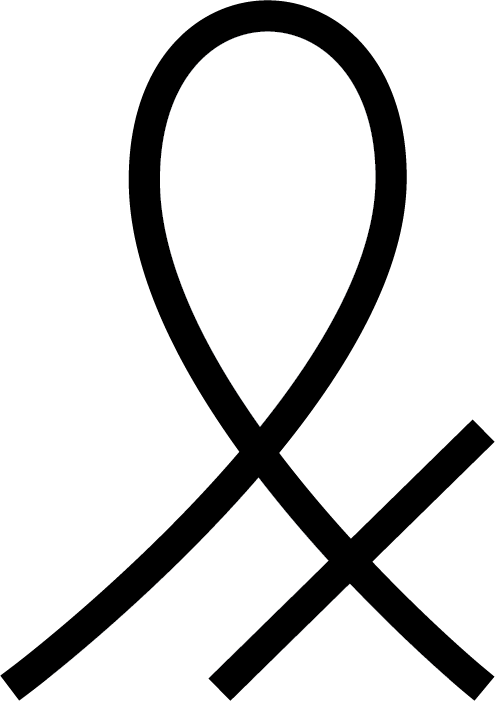
From this Happy Period came the development of the Runf-Mailaf alphabet, an ancient ur-script whose name remembers its two Pantarctican discoverers. This alphabet, in fact, had a vastly wider range of letter forms than any later or contemporary known alphabets. It is said in Quatrian myth that this alphabet contained all forms, and as a result, all possible words.

Here is a partial reconstruction of one segment of the Runf-Mailaf alphabet:

[image]

And a highlight on some of the parallels with out modern Pantarctican letter forms, which we inherited from our Pentarch ancestors, a sea-faring people:

[image]

One interesting thing astute observers will notice is that the modern Pantarctican symbol 💲comes from the ancient Shapist alphabet, along also with the suits of playing cards, ♦️ ♣️ ♠️ ♥️, the play and pause symbols ⏯, and so on and so forth.

Quatrian myth had it that for Shapist societies, this alphabet was more than just a system of writing, it was a literal record of entities held in fixed form, and whose sequences therefore were seen as real events, rather than simply depictions or or references to real events.

That is, of course, until the coming of the Shape Wars, which sundered this state of early harmony enjoyed by a world still young and untainted by pride, chaos, and despair.

Proto-Villanovan culture (European pre-history)

Proto-Villanovan culture was part of the central European Urnfield culture system, similarity had been noted in particular with the regional groups of Bavaria-Upper Austria[1] and of the middle-Danube;[1][2] however, a derivation from the previous Terramare culture of the Po Valley is also hypothesized.[3][4] Various authors, like Marija Gimbutas, associated this culture with the arrival, or the spread, of the proto-Italics into the Italian peninsula.[1]

Source: Proto-Villanovan culture – Wikipedia

Babylonian world map (Cartography)

The map is centered on the Euphrates, flowing from the north (top) to the south (bottom). The city of Babylon is shown on the Euphrates, in the northern half of the map. The mouth of the Euphrates is labelled “swamp” and “outflow”. Susa, the capital of Elam, is shown to the south, Urartu to the northeast, and Habban, the capital of the Kassites is shown (incorrectly) to the northwest. Mesopotamia is surrounded by a circular “bitter river” or Ocean, and eight “regions”, depicted as triangular sections, are shown as lying beyond the Ocean. It has been suggested that the depiction of these “regions” as triangles might indicate that they were imagined as mountains.[1]

Source: Babylonian Map of the World – Wikipedia

Canals of Light

During the race back to the city of Abdazon, between the Betrayer who had half-hold over Andal, and Elum and Delrin, the owl familiar of Elum, Lux, returned to the Forest Villages. Lux was to retrieve aid for ailing Ayad, and burial for his poor brother Ayar, both of whom had fallen to the guiles of the Betrayer.

Upon his retrieval by a scouting party, Elan, the sister of Elum, took the unwell and convulsing Ayad under her care in the hut of her family. She laid him on a bedroll near, but not too near, the fire, his sword beside him, and plied him with strong forest herbal concoctions against his convulsions. Though she knew not the nature of his contagion, she could sense the stink of the Betrayer, and knew somehow instinctively that her charge must be kept alive, and the evil influence fought.

Meanwhile, as Elum and Delrin left the protecting boughs of the Great Forest, and crossed the plain toward the Weeping Waters, the Great Bridge, and the opening of the Passage Inward (to the Hypogeum), Morbat the magician received word of their passing from his corvid spies. As the eyes of birds and animals can detect the color and intensity of True Love perhaps with greater fidelity than humans can, they warned their Master too of this ensuing development. Fear over jeopardizing his betrothal contract had lead him, in the first place, to petition from Wormwood a Deviation, which was granted in the form of the Betrayer. But knowing something too himself about the ways of deception, he needed also to be sure of his outcome. So he set about laying his own traps under cover of darkness around the place of the Weeping Waters for the confrontation which was sure to come.

Delroy, who had grown by this time rich beyond measure, and was one of four Headmen of the City of Abdazon, felt a mounting fear. Since the return of his Best Man, Andal, with news of the failure of their mission to deliver his daughter Delrin to the faraway city of Threx (and beyond), Delroy had grown increasingly uneasy. Andal, though loved and dearly trusted, was clearly not himself, and would alternate in turns between a near stupor, and an eerie alter-ego where he spoke in strange tones and dire words about the menace approaching them, which held his daughter under its sway. So Delroy stationed a special guard to keep watch night and day over the Great Bridge, challenging all passers, and rejecting anyone not explicitly authorized from passing on into the city. But most of all, he feared Morbat, and that he would soon come to collect the debt Delroy had incurred to him in bringing his wonderful daughter into the world in the first place, so many years before.

Though Elum had seen with clarity that the initial deceptive vision presented to him by the Betrayer would come to pass, and that Andal would warn Delroy against him, what happened next was cloudy and haunted his dreams. Forking futures appeared from that point on, branches on the Great Tree, some where Elum surrendered, some where he was captured. Others appeared wherein he and half-mad Andal slew one another in single combat, as Delrin cried out in terror. In still others, Lux would appear from the sky in a flash, and he would see the Betrayer standing there, revealed, in many places at once. And a Great Beast would rise up, taller than many men, with a great white cloak, and the long face of a strange animal…

And though it was fearful, it was this future — which he sensed was still somehow open-ended — he tried to steer them toward. He sent out a message to Lux then, on the canals of light which linked their two hearts, to hurry. For battle, and revelation, would soon be at hand.

Though far away, Lux heard him, and shot into the sky.

Half-Hold

And so it came to pass, just as Elum had seen in his vision, that Andal was not challenged on the Great Bridge by the guards there. Instead, he was hailed and escorted forthwith to the Hold of Delroy. Therein, the Betrayer, whose half-hold had driven Andal to madness and flight, took power over Andal’s tongue, to drive all to ruin. He told Delroy that Elum the woodsman was the Betrayer in disguise, that he had hold of his daughter Delrin, and was coming to kill him.

It was of course untrue. The Betrayer had instead half-hold over Andal, and still somewhere deep in the Great Forest, whole-hold (or nearly) over Ayad. He had been partway through the incantation of binding over Andal, and had not yet completed the Ritual of Transfer, when Elum appeared, and in combat was rendered unconscious by him via a blow to the head.

This indirect physical contact is what triggered the deception which appeared to Elum, and which was actually born out after in truth. The deception was, then, in the early knowledge, the needless pre-awareness of a darkness and suffering to come, which humans did not ordinarily have to bear so keenly. Thus the suffering would be doubled, or trebled over the passing of time. Unless it was not all truth and it could in some way be thwarted, or diverted, the flowing course of time. Or so ran Elum’s thoughts as they traversed that wood.

On stage, the scene of Andal’s enchantment, and Ayad and Elum’s fight was portrayed using two Betrayers. Benda Betrayer as lead, who touched the actor Tendar Trustless (playing Ayad), who fell down in a crumple, as Benda stepped into his place, turning to face Garth Al Elum, the actor playing Andal, and the orchestra struck up the notes of dark conjuration. He reached out to Andal, touched him heavy on the shoulder, and he too fell down as though dead. And as Benda Betrayer jumped into his traces, another nameless dark-robed Betrayer appeared behind him on stage, to take his place in Ayad’s stead. The two figures turned to look at one another, startled, and the audience let out an uproarious laugh in this moment of high dramatic tension. It was soon shattered by the quick fight with Elum, and the second back-up Betrayer being rendered unconscious.

Rendered thus unconscious in the body of poor Ayad, Second of the Best Men of Delroy, the Betrayer sought release from this useless form. Had he been killed by Elum, he could have transferred fully to the body of Andal, and brought ruin direct, rather than circuitously on the House of Delroy. But as such was trapped in unconsciousness. The Betrayer tried to betray the body itself, parasite against host, causing it to rise up against itself in violent convulsions. And while the owl Lux flew off in search of help among the Forest People, the Betrayer fought a deep internal struggle with that part of Ayad which still remained buried within.

And far away now, where Delrin and Elum exited the Great Forest, the watchers of Morbat the magician stirred, rose up, and sent word along to their Master. His bride-to-be awaits.

Elum’s Song

In Pantarctican mythology, we see references to a period of poetic pseudo-history during which the waters below and the sky above were one, and not yet divided. In that famous epic, the Supreme Administrator determines the provisioning and administration of these domains would be more efficacious independent of one another, and makes it so through decree.

By contrast, in Quatrian mythology, no such legislative division of ocean and sky has occurred or yet been contemplated by even the Long Lines of Bards, High Augurs, and Archpoets. In fact, the two realms are as yet contiguous. The motive-original for Delrin’s voyage to Threx was to rendezvous and strengthen trade relations with certain sailors capable of making the passage to these Buorthern Realms.

Though Delrin’s tale took her not to Threx (or at least not in extant recorded versions), she did rendezvous after a fashion with her intended target. Elum’s family, though Forest People through and through, originally descended from Buortherners escaping one of the Old Crises. And he navigated the Great Forest trails as though they were a vast surface of changing seas, currents and eddies converging, propelled onward ever floating, skimming the surface, barely touching earth, leaving almost no trace, but for the light of their passing. For Delrin ran too now on these winged feet, and they together traced the madman Andal, captain of her father’s Best Men, as he fled back in the direction of Abdazon.

As they passed through the wood in chase, Elum hummed and sang out the tune of an old Majonan voyaging melody, to which he set the following lyrics, extemporaneously, which have been transmitted to us via the ancient Quatrian texts:

“A shadow clouds the light of his passing.
The Betrayer leaves many false trails
Through the Dark Wood, and the Light of Day.
He steps at times with great
Force and gravity, turning in an
Instant untraceable and appearing
At another location at an impossible distance.
Wings he has not, but a kind of flight,
A leaving and returning,
Passing through unseen doors and tunnels
He has mastered.

Would that my skill as a woodsman
Were sufficient, but the lands
Walked by the Betrayer
Are not all of these Daylight Lands
Where walk now we.

Though on this confusion of trails
We two cannot rely,
Clear is the direction of movement:
Toward that rich and happy city, Abdazon.

Your father’s Best Man, I fear
Becomes his worst enemy,
Wearing the mask of fidelity —
A deception against which natural compassion
May lead to ruin.

Andal will not be challenged by the
Guards watching over the Great Bridge.
His captain’s livery they will recognize,
Though his wild eyes they may not.

A younger guard will escort him
Forthwith to your Father’s Hold,
Expecting news of his daughter.

Though the Betrayer have only half hold,
It will be enough to control that
Best Man’s tongue, to tell your Father:

‘The Betrayer is coming
and he has hold of your daughter, Delrin.
He is of the Forest People,
and he has slain poor Ayad and Ayar,
brother guards and Best Men,
and comes to take your head.’”

Elum’s song trailed off into empty space.

After a time, Delrin asked him in the plain tongue, “How come you to have these dark thoughts?”

Elum responded, “Deceptions shown to me by the Betrayer when the blow of my bow landed on the head of Ayad. Through touch.”

“Deceptions?” Delrin replied. “If they are deceptions, then they cannot be trusted. They are not fated to come to pass.”

“Aye, but deceptions may serve truth, as in the case of predator and prey. Who survives deceives, outwits, outruns. Likewise truths too may serve the purposes of deception in the hands of the Betrayer.”

“The many trails are one,” said Delrin softly.

“As the boughs and branches and twigs of the Tree of Anthuor,” Elum agreed. “Still… my heart is heavy.”

Cursed Encounters

At the stone circle, Delrin and Elum (and Lux, who alighted on his shoulder) stood facing Andal, the captain of her father’s Best Men and appointed guardians over her, and Ayar, who was now weeping over the body of his fallen brother, Ayad.

“Cursed be the Betrayer,” spat Andal. “But blessings we should find you again.” He went to embrace Delrin, who also felt tears in her eyes welling up. “We thought we’d lost you forever.”

After a moment, Elum said softly, “Let us tarry not long here, friends. For the Betrayer is still at hand…”

Ayar protested loudly, “We will not leave my brother here, to be eaten by beasts of the forest!”

“Aye,” Andal agreed. “He lived and died honorably. And so shall he rest.”

Elum cast a warning glance at Delrin, but said nothing. She, of course, caught it, the two having become close traveling companions during these many… weeks? months? days? they’d spent together journeying up and down the Great Forest, visiting the Forest Peoples in their villages.

She shot a return glance to Elum, and addressing Ayar and Andal, said, “We must make haste our preparations. We’ve all seen the danger… Either we bury him here, or we make up a litter to carry his body home to Abdazon.”

“Either way,” Andal added. “We must return and warn the city — ”

As he said this, Lux let out a shrill cry and flew up, shooting high into the air. An acrid stench assaulted their noses, and from a few feet off, the burned and blackened form of the Betrayer appeared.

Andal and Ayar leapt after it with their swords, only for it to vanish as they closed in.

Then the apparition appeared likewise behind Elum, and Delrin, who turned to face it. Elum notched, but did not let fly a shaft.

The monstrous phantasm vanished, and reappeared again in a third position. Lux cried out, and dove down to attack it, claws out, and wings swooping down into empty space as the form disappeared again. And it was then Delrin and Elum realized they had lost sight of the Best Men, during the scuffle.

They ran off around the huge boulder to try to find them, when suddenly from where they had just departed, a deranged looking Ayar growled, leaping at Delrin, his short blade menacing. Elum jumped into the air, rebounded off the rock of Acho, and brought the heft of his bow down with a whomp on the head of Ayar, the tip of whose blade was nearly at Delrin’s throat.

“Elum!” she screamed.

“He’s not dead!” he replied. “But the Betrayer has hold of him.”

She looked around, panic rising. “And where is Andal?”

The two turned, scanning. Lux sped off toward the forest.

“There!” Elum pointed.

Through the outer trees, Delrin saw the shape of the captain running off into the wood.

“Where is he going?” she said. “Andal!” she screamed

“That is the way to Abdazon.” Elum said. “To your father’s city.”

“And is he… ?”

“Under the Betrayer’s hold? I cannot say. There is light still in his passing.”

“He wouldn’t just run off! He’s a brave man, my father’s Best!”

She turned then to the unconscious Ayar. As they watched, his body underwent violent convulsions. She went to comfort him, but Elum held her at bay.

“Do not touch him. We do not understand the risk.”

“We can’t just leave him here, and his brother’s body…”

“Lux will go find my people. They will come, and take what care they may. We must go now to find your father, before the Betrayer can.”

She didn’t want to leave them, but saw immediately the wisdom in his counsel. When Lux returned to him, Elum sent her on to find help among his people, and return to find him in Abdazon. And with that, Delrin and Elum set off after Andal, toward the Great Bridge, and Abdazon.

On the Nature and Significance of Triangulons in Classical Quatrian Culture

Just as Pantarctican civilization was preceded by, and largely absorbed Ancient and Old Quatrian culture (see also: Quatrian diaspora), so the Quatrians themselves were preceded by the Triangulons, the Triangulons by the Duogons, and the Duogons by the Singulones.

As a result, all throughout all periods of Quatrian culture, historians have uncovered countless references to precursor Shape societies. But not all these memories are happy ones, for many forms have been lost in the Shape Wars, which is why the image of a divine Triangulon musician in the reproduction above (Fig. 1) comes from a funerary urn scholars have dated to the Middle period of Quatrian culture, during approximately the time period where the Quatrian Saga takes place. It is a period of turmoil for Quatria, as at this time, they have re-made contact with long lost ancient allies and some former colonies among the lands of Kremel, which will lead inevitably to the events which will prove to be the undoing of their once-great globe-spanning culture.

Artist's Representation of a Quatrian Funerary Urn Depicting a Sacred Triangulon Musician

During the time period of the artist who illustrated the funerary urn reproduced above, Benda Betrayer is rising like a star on his ascent to the throne which will be installed on the island of Ovarion, elevated out of the seas one year earlier by Wormwood, and from which the Fifth Age would commence. The First or so-called “Soft” Invasion of Quatria, leading to the Fall of the Hypergeic Temple and the shifting of the anti-node out of the House of Music into the House of Silence.

Surviving records strongly indicate that Triangulons were seen in Quatrian society as beings of great spiritual potency and a type of culture hero, bearing for the early Quatrians who had emerged from the Hypogeum gifts of knowledge, poetry, agriculture, astronomy, hygiene, and most importantly, music.

In the original Protoraxis songboard parchment , we encounter the following cryptic fragment, translated from the Quastrish:

“Center, edge. Node, anti-node. End, beginning. At once the same but different. That difference is the history of change. Delta. Center, edge, change. By the bounding ring, the Reign of the Triangulons has commenced.”

The parchment is written in the popular form of an instruction to cartographers, copy-lorists who would deign to depict classical Quatrian geography and history in visual forms, as in parchments, manuscripts, paintings, or projections. A common type of mythical-moral essay of the time, it reads as a combination of geometry and mysticism which has echoes of Pythagorean, Neo-Pythagorean, and Enteki exoplanetary cosmology.

By this time in Quatrian culture, the Triangulons were most commonly represented, as in the reproduction above, like “triangle faced” beings, which we also see encoded into medieval marginalia by Quatrian migrants who found work in Pentarch scriptoriums after the collapse of their homeland.

Most commonly, we see Triangulons depicted playing an instrument, and usually it is the theorbo, or bass lute, (as in Fig. 1) over which they are considered patrons and who novices and adept players petitioned through endless ritual practice, culminating finally in the Trial Before the Masters, the successful completion of which earned them the status of Entered Musicians. Interestingly, Triangulons are never depicted in authentic art of that time playing the bent metal instrument hung on a string and struck with a short rod, the so-called “triangle” modern audiences would be familiar with, though they did invent this and all other musical instruments.

Triangulons, due undoubtedly to their triple nature, are also always depicted in classical Quatrian art as having three legs, which corresponds with the reproduction seen above. This ancient mythic concept has survived, of course, in modern culture in the form of the three legged race played now only by children, or at the rare corporate picnic. They are also generally portrayed in groups of three, which is echoed all throughout Quatrian legends, and is even said to be the origin of the modern “power trio.”

Lastly, we see what modern Pantarcticans most commonly think of as a “George Washington haircut.” This is actually partly correct (though based on a spurious historical comparison) — as George Washington is thought to have been of Quatrian noble-musical descent. This, of course, is the reason the triangular pyramid appears on the back of all one dollar (Singulone) bill. In other depictions, we often see mythic Triangulon musicians wearing a cloak or hood, and holding a lyre, strythys, zither, or rarely, a pipe or pipes, sometimes lashed together with cord.

As can be seen, the importance of this intriguing race of beings in Quatrian culture simply cannot be under-stated.

The ‘Method’ of the Ancient Cuatrians (Palmer, Edwin – 1908)

The Cuatrian would lie on his back and picture an Opening to a Dark place. Each person’s entrance was different; Chiara herself envisioned a cave, but the imagining could be a temple, a closet, a ‘fairy house,’ or a fountain. As long as the opening leads below the surface of the world, it is acceptable.

Next, the seeker would listen closely until he began to hear a faint ringing noise: the “Voice of the Swallows,” who are sacred to Antuor. Eventually the would will become a two-syllable ‘word,’ similar to a Hindoo “mantra.” The Cuatrian would then begin repeating this word, internally, as though a chant.

As the word was repeated, the visionary would slowly be drawn into the darkness of the Hypogeum and a series of colors would begin to appear. This word and series of colors became the ‘key’ to the Hypogeum, through which he could access this state at any time. This key would only work for the individual Cuatrian.

Source: Entering the “Hypogeum”: A Method – Quatrian Folkways – Medium

Page 135 of 177

Powered by WordPress & Theme by Anders Norén