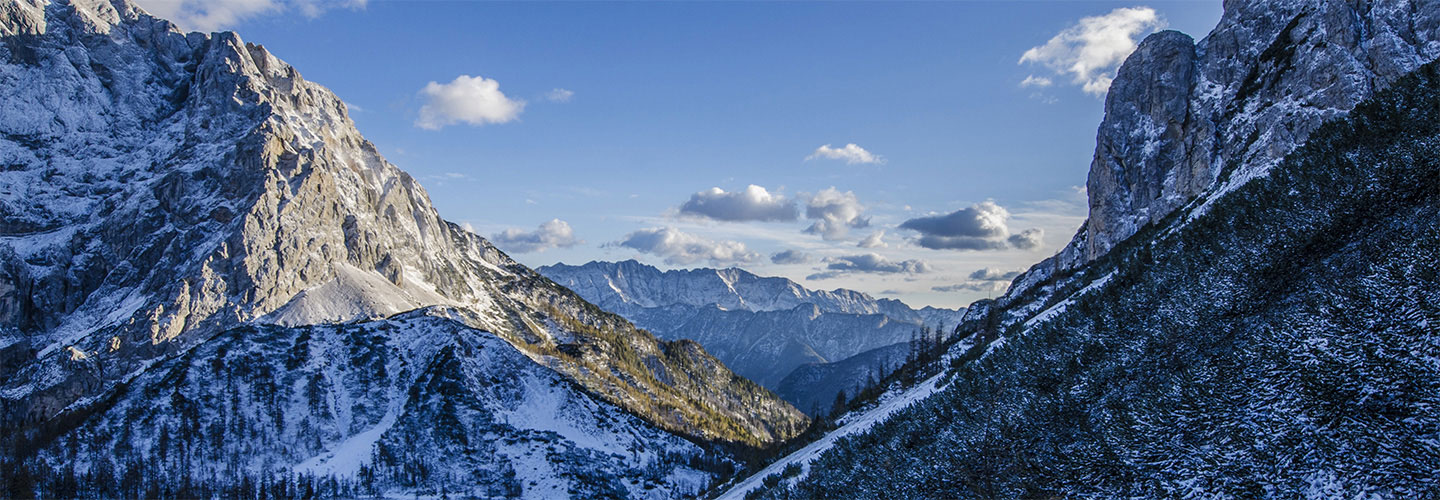
Their footsteps were leaden as soon as they set out. Benda made for what should have been the Great Road to the Temple Mount, but it was simply not there. It had either been removed, hidden, or simply never built, depending on where – and when – they truly were.
Tob Gobble, back to feeling fine, was filled with his characteristic mirth, and proceeded to while away the time repeating jokes and tales he had heard round the campfire the evening before amidst the men-at-arms.
“They’re really fine fellows, at the root of it,” he said, to no one in particular.
Benda responded absently, “I’m sure.”
They stayed within sight of the water, partly under the knowledge that the Great Road should have laid alongside it as it rose up amidst the hills, cliffs, and to the Temple Mount itself. They did it partly also out of simple fear of being lost if they ventured too far from the sight of it, with only those small dread mountains in the distance as reference.
The passage of time was interminable, or it happened not at all. Benda could not rightly tell.
Eradus, who had been pensive like the others (except Tob), finally put words to it, saying aloud, “What if we never find it? What if there’s nothing and no one there when we arrive?”
Greppo, in whom the madness had been tempered by a growing uncertainty as well, finally added, “What if we never arrive?”
“Ooh, this reminds me of a very famous tale from a country I once had occasion to visit,” started Tob Gobble.
Benda cut him short, “We’ll find it. I can see it with my heart as plainly as I can see any of you with my earthly eyes…” He trailed off.
Perhaps it was Benda now the madness gripped. He considered the possibility.
High above them, an eagle cried, and circled. When they waved to it in recognition, it flew off in another direction – decidedly away from the water.
“He wants us to follow,” Greppo said soberly.
“Know who you follow,” Eradus replied.
“Have we another choice?” said Greppo. They both looked at Benda searchingly. “It seems we’ve made no progress since setting out. Why, I have the sensation that the village still lies just behind us over but one or two low hills.”
“Or that the village too is now as lost as we are,” intoned Tob, who was suddenly spooky, running a chill through Benda.
“Come then,” said Benda. “If the High Augur reads the flight of birds, so shall we.”
At this time, the eagle who was Murta flew back to them, in slow flapping agreement, and then flew off again in the direction he had earlier indicated that they should follow.
As they walked, they began to notice an eerie effect in the landscape. Walking towards them now, the mountains seemed instead to recede from view. It was as if the great plain which was turning to desert was expanding as they traversed it. They turned to look toward the sea, thinking it too would be vanished, but it seemed ever within reach, just over the next hill behind them, or the next.
“Most peculiar,” said Tob. “Most peculiar, indeed!”
“Perhaps this calls for a poem,” he said, twirling about, and gesticulating with his rootlets. “Something… extemporaneous,” he said bowing low with a flourish before them, before anyone had time to protest.
“Gentlemen, I give you: Invocation at the End of the World.“
“Ahem,”
“Dweller in the lost direction,
lead us beneath shaded paths,
under your protection.
Keepers of song and silence,
we ask you unveil now your vision,
and our place in it.
Send us costumes that fit,
provide for the audience a nice place to sit,
something to drink,
and a nice time to think back upon someday
when our bones (or our roots) are old round the fire.
Before the end of the world,
we speak this our desire.
We invoke thee!
Show thyself!”
For a moment, the world wavered, but nothing happened. So Tob whipped out his reed flute, and began to toot on it incessantly. The sound was so annoying that they all plugged their ears, and asked him loudly to stop. He did finally, and they all broke down laughing.
When they had somewhat recovered, they saw that Murta had appeared once more over the horizon, and was now flapping his great wings to hover over a particular spot out in the desert. A formation of rocks, an oasis.
“Your incantation worked,” said Greppo. “Let’s go.”
“Invocation,” corrected Tob, as though he were teaching a small child. “I would be delighted to demonstrate the difference in style between the two genres, if you’d like.”
“Perhaps another time, Tob,” said Eradus, “Look, we’re halfway there.”
“More than halfway,” said Benda. “We’ve only taken a few steps, but we’re almost there.”
So it was that they arrived suddenly upon a natural rock formation, which had been hewn here and there expertly by the hands of man, and upon which a slab of stone had been laid like a roof. The area around the house, for such it did appear, was rich with verdant grasses, and an unusual kind of shrub none of them could identify. A small stream flowed out from under the roof, which they turned the corner and saw the source of, a natural well. Small wonder this place had been covered and protected, and could nourish plants amidst a hard barren landscape all about.
At first, they saw the cavern within as empty, but as their eyes adjusted to the long shadows of the cave, they recognized a man there in a cloak, sitting on his haunches, staring at them, almost as if unseeing.
“Hello,” waved Benda. The figure did not move, so he added, “Sorry to intrude. We are… ah, lost.”
After a few moments, the figure replied absently, “Lost…”
“Are you lost too?” asked Eradus.
The figure turned then, and regarded Eradus. His eyes began to focus, it seemed, on the here and now.
“Lost too…” he said.
He took a sharp breath then, closed his eyes, and nearly fell backwards, but caught himself. He stood up fully.
“Forgive me,” he said. “I took you for phantoms from another time and another place.”
“Erm,” said Tob.
Greppo eyed him sharply, “The important thing,” he cut in, “is that we’re here now.”
“Yes,” the man said, and strode towards them. He reached out to shake the hand of Greppo in ritual greeting. “I am called Elum.”
Greppo took his hand, and said in return. “And I am called Consciolus Greppo, King of the Citadel, and First King of Kremel.”
He presented himself then to Eradus, who, before introducing himself in return inquired, “Elum, like the village?”
“Village?” Elum replied. “I hail from the forest villages, a long, long way from here.”
“Not like the village,” said Benda, who then introduced himself to Elum, and embraced him excitedly, like a long lost brother. “Like the legend,” he said. “The Dark Dance Cycle! Sad Elum, who sat in his cave, beside the small stream, which flowed out of the deep cleft, pining for his lost love, Sweet Delrin.”
“How come you to know my life, and my love?” Elum looked shocked, but felt a kind of recognition dawning on him too. “Have we met?”
They went out of the cave then, and looked down the path of the small stream, as it wound its way down the hills towards the sea, and what had been – or perhaps one day would be – the village of Elum, by the Bay of Erasure (or the Bay of Pleasure depending who you asked, or when). And they saw in the distance the ramshackle huts, and men-at-arms like ants at work enlarging the pier there.
“Maybe we have,” said Benda. “Or maybe we yet will. A man greeted me once here on the beach, wearing the cloak and insignia of his Order.”
“His Order?” asked Elum, looking out at the world.
“The House of Silence,” said Benda.
“Silence… yes,” said Elum, a flicker of memory stirring.
“But the houses are broken, and thrown down now. Haven’t you heard?”
“No,” said Greppo. “We are only travelers to this place. Pray tell us what news you’ve heard…”
“Not new,” Elum stammered, trying to remember. “Old, very, very old. A river–” he exclaimed, and then stopped.
“A river that… flows upstream,” he said looking at each of the others for some sign of recognition.
Then he closed his eyes and said, “The Hypogeum was opened, and the river of time which once flowed out of it was set to flowing back upstream. There… isn’t much time left. I must complete my task.”
“We saw her,” said Benda. “When we arrived in this place, where the towers Jyagar and Raggath should be.”
“Saw who?” said Elum, confused.
“Heron,” he said. “Delrin.”
“Oh, I have seen her too,” he said. “She comes to me, even now.”
“Then your task is nigh complete,” said Benda.
“Not yet,” said Elum, who went off alone around the side of the stone dwelling. He bent down, and pulled off some branches of the peculiar shrub which grew there.
He returned and said, “I was set here on this vigil by the Powers to wait for the return of another.”
“Another?” said Tob.
“The New King,” he said. “And to give him this gift.”
“I am the King you speak of,” replied Greppo, “but its just a plant.”
Elum then, laughed boisterously. When he recovered himself, he said to Greppo, “It is no more ‘just a plant’ then are you the New King.”
Greppo frowned, but said nothing.
Elum stepped next to examine Eradus’ face carefully.
“The New King is a mindspeaker,” said Elum on the channels of light, looking at him. Eradus did not hear him, but Benda did.
Benda replied on those same lightways, “I am no king. I deserve not that honor. I’m just a man, like any other.”
“Then that will have to be enough,” said Elum out loud. He went over to Benda, took his hands, and into them placed the branches of the herb axla, which he had recovered from beneath the Weeping Waters, when Delrin had fallen from the Great Bridge into the Cave of Unnaming.
“The houses are broken,” Elum repeated. “Quatria is retreating into the Hypogeum, like a flower fading after its season, drawing the life back into itself. There is only one True House, the House of Life, and unto you is given its care for this generation, and for those to come. Take these branches, and go and plant them on the island of Ovarion. The place that was prepared for you is waiting. Linger no longer in this dying world. Go, and plant the new one.”
Benda took the branches, and wiped the tears from his eyes, and when he looked again, the cloak had fallen from Elum’s shoulders, and in its place, a great white bird with a long crooked neck stretched out its wings, and flew off toward the sea to meet its mate.