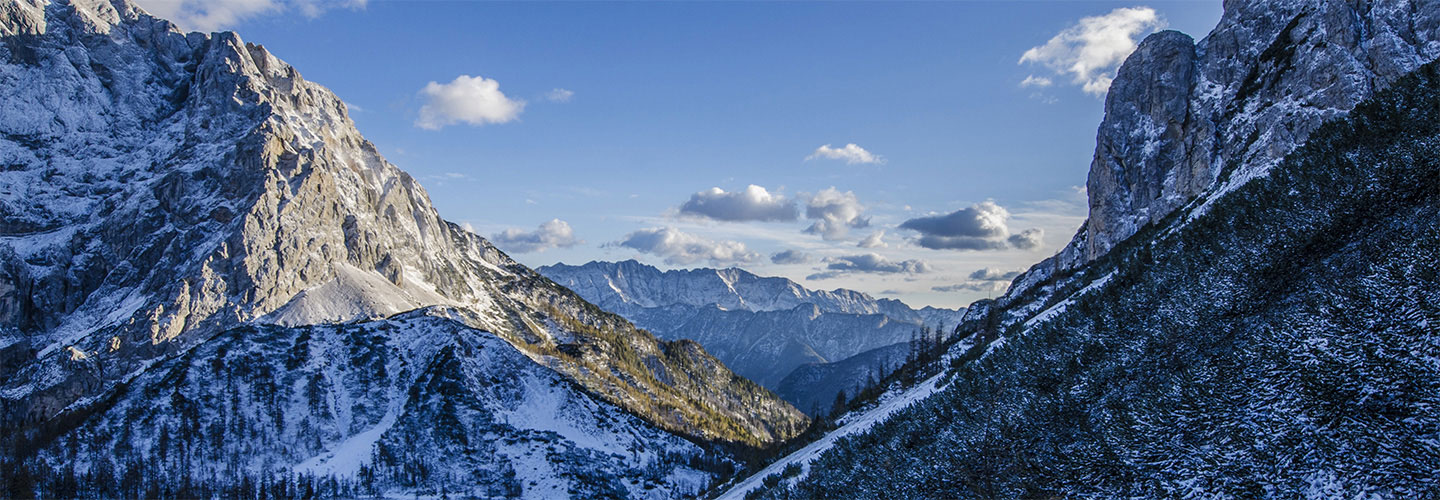
Benda had not meant to wander off and get captured. It just sort of happened.
He woke up the following morning in an uncharacteristically bad mood for him after hearing Tob’s tales of his people, his brother-father, and his own origins. Despite having been lost at sea, stranded in a strange land, and then crossing back over the ocean and nearly half of a continent to get back home, Benda’s spirit had never faltered until this morning.
He woke up under the rosy fingers of dawn to find Tob sound asleep on a makeshift bed of leaves. He looked at him there and found him both comic and pathetic, a tuber out of soil – like a fish out of water – somehow cast into the world of men to play a part only he apparently seemed to understand. While Benda certainly loved a good tale, he had heard enough of them – lived enough of them – for, he felt, several lifetimes now. And somewhere into Tob’s third elaborate history of the night before, Benda began to despair of ever reaching the end of that bottomless well. And in the morning light he sat there and wondered whether it might not be better for him to quietly slip away, to leave Tob with his tales, while he headed south and slipped away to meet the conclusion of his own adventure.
Though he had slept soundly, Benda felt endlessly fatigued, and turned to look out over the plains from the small copse of trees where they’d bedded down. In the distance, to the west, he could sense the sea – having spent his entire life alongside it, or upon it. If he simply kept the sea at his right, he felt sure he could find his way south to Cannaxus on his own. He eyed the sun, the top of whose disc was just beginning to break over the mountains to the east, and he eyed the clear empty skies nervously. Instinctively, he drew up the hood of the Cloak of Becoming over himself, to shield himself from prying, flying eyes. He knew he was not yet to safety, and that somewhere still, in the airs above, Murta the shapeshifter was still searching for him.
All at once, he decided on his course of action he decided, and the die was cast. He stood up, gathered himself and his belongings, including the harp Eril, and hid everything below the folds of his cloak, and set off across the great plain toward the south. He wanted to get as far as possible before the sun rose too high in the sky, and the camouflaging effects of the cloak became less and less effective.
He felt guilty for leaving Tob Gobble, but decided if the poor creature had made it this far, he would be alright. Benda fixed his mind only on his objective, only on home and his family. In that moment, he decided what he would do on arrival in the south lands. He would not follow his duty. He would not seek out his king, the Second King of Kremel, and relay to him all that had happened on his marvelous voyage. He would shun altogether any further games and intrigues of kings, and he would simply slip quietly into his village into the arms of his wife Luala, and then figure out what to do next. He felt lighter already, and in his heart the distance he had left to travel seemed greatly reduced.
He made it a couple of hours without incident. The strange but oddly charming Tob Gobble had been left far behind. If he gave chase, there was no sign. But as the sun climbed towards it zenith, Benda began to feel increasingly wary and spied upon. Though he trusted in the cloak on his back to hide him somewhat, he felt wide open and exposed on the grassy savanna, and somewhere in a deep anxious part of his mind, something told him to find a place to hide and lay low for a few hours.
He did find, after a while, something of a shallow hollow in the tall grass, and probing first with his foot to make certain it was not occupied by some other wild traveler, he knelt and crept down in it, arranging the swaying strands of grass around him as well as he could to hide his bulky presence. His cloak might confer a certain degree of invisibility to his actual body, but he knew other signs might give him away. So he was as careful as he knew how to be. He hunkered down and simply waited. Before long, he had fallen lightly to sleep.
Time passed, and Benda was woken by the sound of voices not far off. At first, he mistook it to be the jovial voice of Tob, having caught his trail, probably telling jokes and tales to himself as he went. But as they drew nearer, the tone was not like Tob at all. And they were two. The sound was low and gruff, and they spoke in a language Benda did not understand.
Benda lay perfectly still, like an animal in the bush, and hoped they would simply pass him by. Whether they were friend of foe, he did not want to be discovered. He wanted only to be home again, and was of no mind to let anyone or anything interfere.
But the path of the two speakers was converging evidently on his hiding spot. While staying close to the ground, he lifted up a corner of his hood to peer out at them. Xenarths. They were two, astride scruffy beasts which Benda did not recognize (they were gurjuks), and they were lightly armored, as all Xenarths always are.
Benda knew of their kind only in passing, for occasionally they would march through the fishing villages in Cannaxus on their way to or from some other place of conflict. Mercenaries, they held no love for humans, and obeyed only the gold, silver, and precious stones which humans could procure for them. Somewhat smaller than a man, but vastly stronger, they had long pointed snouts like beasts, and were renowned to be fierce warriors, and shrewd and cruel in character. Benda’s heart sank.
The wind, which had helped to keep Benda’s scent hidden until now, suddenly shifted, and though none could yet see him hidden there under grass and cloak, one of the gurjuk steeds snorted loudly, and chuffed. It’s rider reigned him in, and said something low in the Xenarth language which Benda unfortunately did not understand. Even if he had, it would have been no use, for the two riders had encircled him before he’d realized. A panic alarm sounded in his brain, and instinctively he took to his feet to run, but before he could take off, something squeezed tight around him, pinning his arms to his chest, and the cloak fell away from his face.
One of the Xenarths yelled out a word Benda did recognize, “Spy!” and the other tugged hard on the other end of the rope, which sent Benda tumbling off his feet, back to the ground. “Holmat!” the first one yelled. For they had just come from the mountains to the north and east, along the vast ancient Lake Holmat, the center of that tribe by the same name. And they were laden with their share of the booty of a raid in which they’d taken part on a neighboring Squamat settlement. They took Benda to be a man of Holmat, sent out by his fellows to trap and recapture the booty with which they’d grudgingly paid the Xenarth soldiers. This was an old and favorite trick of that tribe, in their endless feuds with their neighbors to the South. They would employ and then betray outsiders, blaming the attacks on them, and then killing those who’d helped them. So, after their own fashion, they were well within their suspicion to take Benda for an ally-turned-enemy scout, sent to waylay them.
Closing in on Benda, they looked at his face only once before clubbing him over the head, and he passed into unconsciousness.